


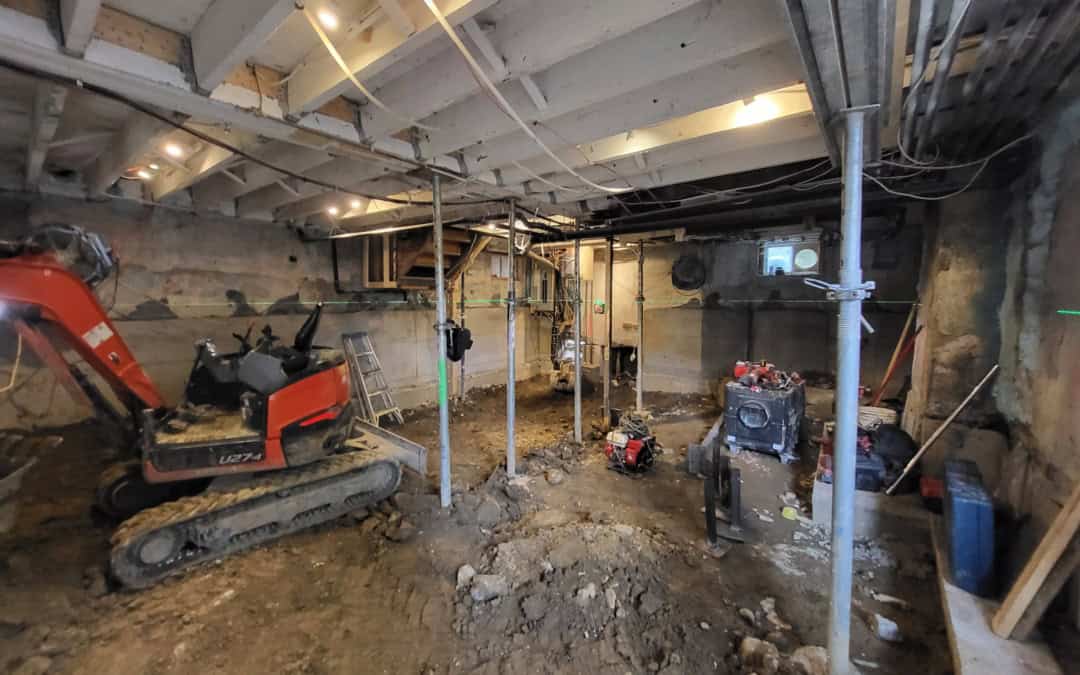
Digging Deep: The Cold, Hard Truth About Underpinning in Montreal
Turning a cramped, six-foot dirt cellar into an eight-foot, polished concrete basement oasis is the ultimate Montreal real estate flex. It adds massive livable square footage without altering your property footprint. But underpinning, the process of digging out the basement floor and extending the foundation walls downward, is major structural surgery.
In fact, waterproofing happens right in this first step and is far more complicated than French drains alone, often requiring exterior membranes or specialized waterproofing additives mixed directly into the underpinning concrete. This isn’t a weekend DIY project where you hand a guy named Steve a shovel.
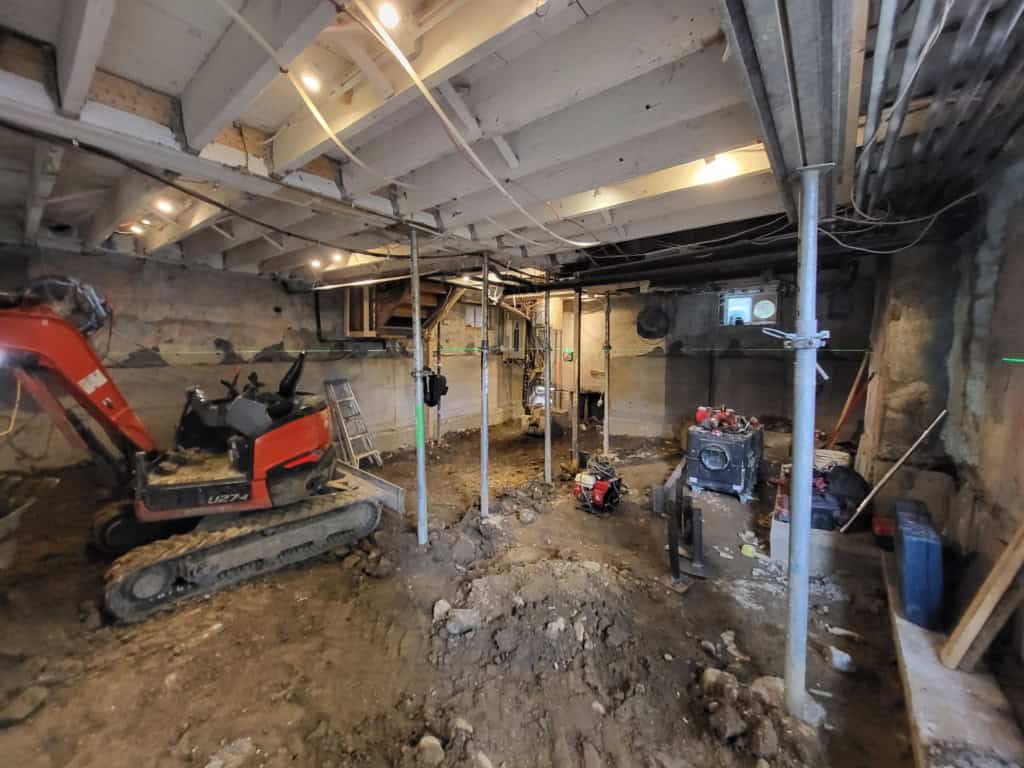
The most common question homeowners ask us about underpinning is: “How much ceiling height will I actually gain for all this money and effort?”
If you dig down three feet, you don’t get three feet of headroom. You must deduct space for a new gravel sub-base, rigid foam insulation, a vapour barrier, and a new poured concrete slab (often with radiant heating tubes). Realistically, a three-foot underpinning dig nets you about 24 to 26 inches of actual living height.

Recommendation: Check out the Fine Homebuilding podcast. Their deep-dive discussions on foundation structural integrity and basement water management will quickly make you realize why underpinning is an exact science, not a guessing game.
Your Specific Action: First, check with our structural engineer. He may suggest a geotechnical engineer to perform a soil test on your lot. You need to know the soil bearing capacity and the depth of the water table before you can legally or safely plan an underpinning project.
What’s Next: Once you’ve successfully dug down and poured a new slab, you have created a pristine, deep concrete bowl in the earth. If you want to finish that space, you must keep it dry. That brings us to your next crucial step, which we’ll cover soon: Interior vs. Exterior French Drains: Bulletproofing Your New Basement Against Water.
J. Collins Construction Built for the eye. Engineered for the decades.