

The Heritage Hurdle: How to Get Your Dream Extension Approved by the City Without Losing Your Mind
If you own a home built in the early 20th century, like our Oxford project,
you don’t just own a house – you own a piece of Montreal’s history. That sounds romantic until you decide you want to build a modern kitchen extension. Suddenly, you aren’t just a homeowner. You are a Custodian of Heritage, and the city has many opinions about how you spend your money.
Navigating the municipal permit process in Montreal is often described as a black box. You put plans in, and months later, a decision comes out. Sometimes it’s a Yes. Sometimes it’s a Yes, but use a more expensive brick. And sometimes it’s a Back to the Drawing Board.
Here is how to clear the heritage hurdle with your sanity and your design intact.
1. Decoding the Acronym Jungle (PIIA and CCU).
In Montreal, if your home has “Heritage Interest,” you will likely encounter the PIIA (Plan d’implantation et d’intégration architecturale). This isn’t a suggestion; it’s a regulatory framework that ensures your new extension doesn’t look like a spaceship landed on a Victorian terrace.
Your project will be reviewed by the CCU (Comité consultatif d’urbanisme), a committee of local residents and experts that evaluates how well your design integrates with the neighbourhood. They aren’t just looking at height and width. They are looking at the texture of your mortar and the profile of your window frames.
2. The Secret Language of In-Kind Materials.
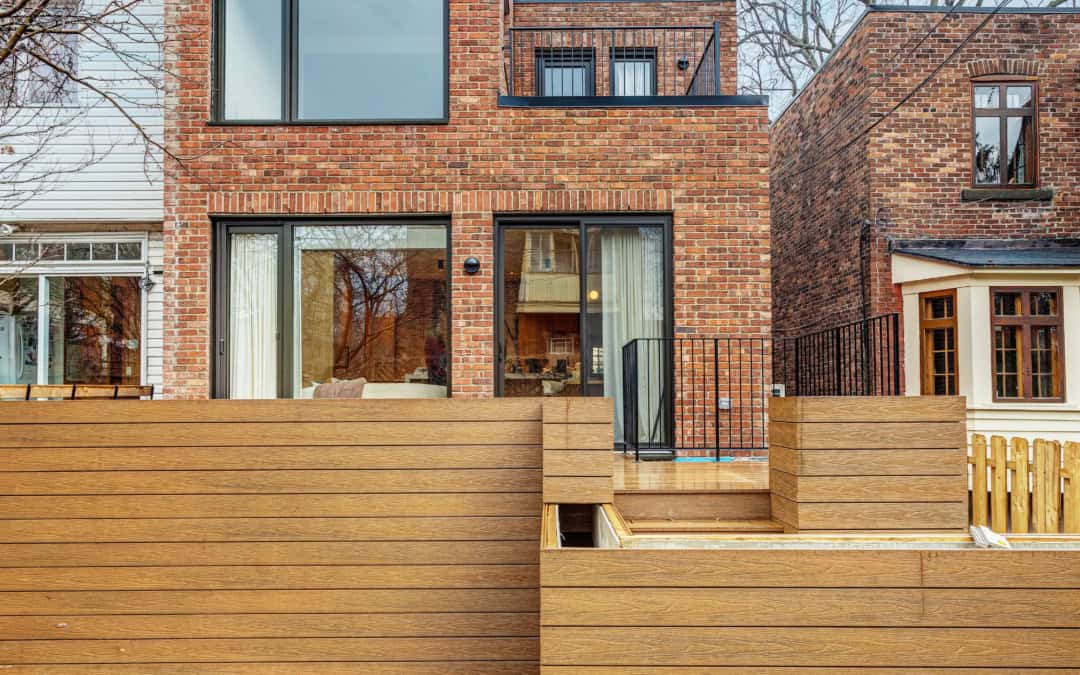
The quickest way to get a rejection is to suggest materials that look cheap or imitative. For a project like Oxford, matching the 1920s masonry wasn’t just a design choice. It was a permit necessity. The city wants to see that you’ve done your homework.
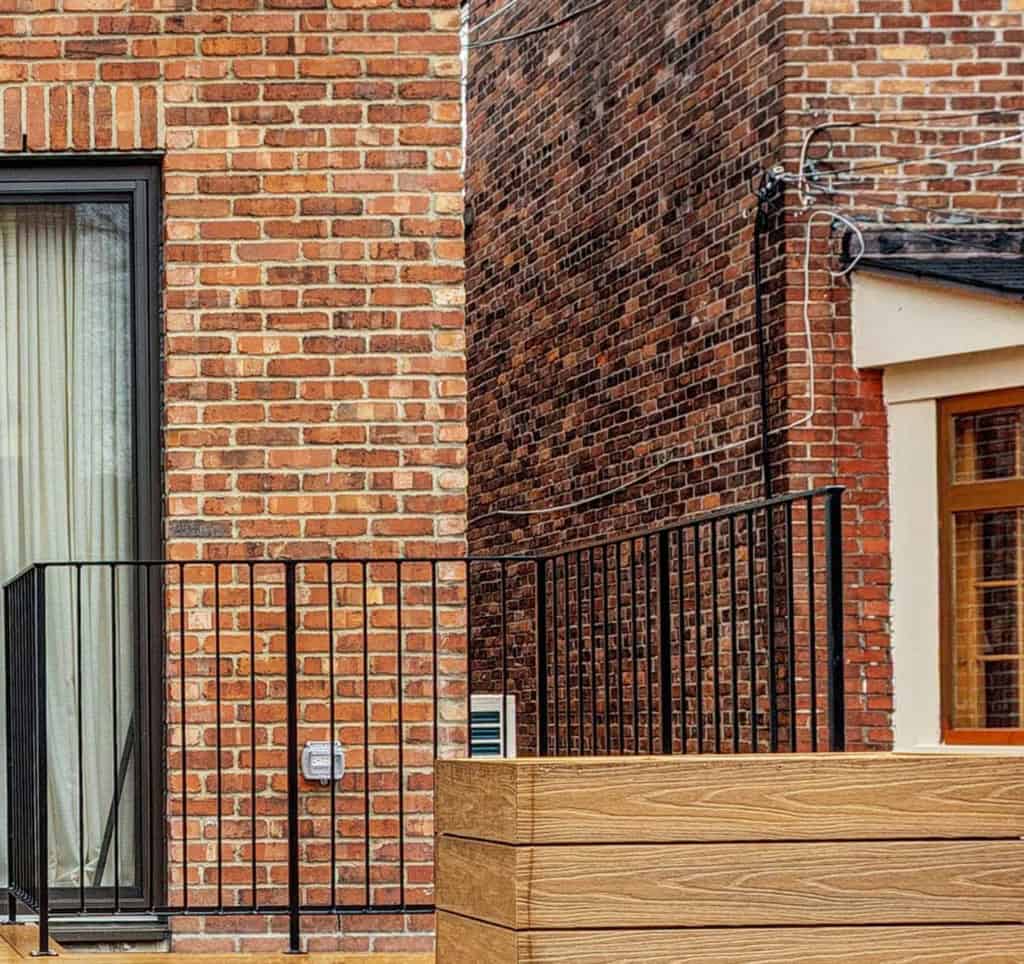
Pro-Tip: Don’t just bring a catalogue to the permit office. Bring physical samples. Showing a real brick that matches the original 1920s clay makes it much harder for a committee to say no.
3. The Reality of the Waiting Game.
The most common question we get is: “Can I at least start the interior demolition while we wait for the extension permit?”
Technically, you can often get a separate interior renovation permit faster than a full building permit for an extension. However, if your interior work relies on structural changes that are part of the extension (like a new load-bearing beam), starting early is a gamble. If the CCU demands a change to the extension’s footprint, you might find yourself undoing the very work you just paid for. Our advice? Patience is cheaper than rework.
Expert Recommendation
For anyone navigating the intersection of history and modern life, I highly recommend The 99% Invisible City: A Field Guide to the Hidden World of Everyday Design by Roman Mars and Kurt Kohlstedt. It features a phenomenal chapter explicitly on “Heritage” and “Regulations” that explains exactly why municipal committees are so fiercely protective of historical details.
One Specific Action to Take Today
Before you spend $10,000 on detailed architectural drawings, schedule a “Pre-consultation” with your urban planning department. Most Montreal boroughs allow for an informal meeting where you can show a rough sketch and get a temperature check on your project. It’s better to find out they hate your roofline now than six months into the official process.
What’s Next?
You could spend the next six months arguing with a municipal urban planning committee about the historical accuracy of your window trim. Or, you could let us do it.
At J. Collins Construction, we don’t just pour concrete and match 1920s masonry. We translate bureaucracy into reality. We understand the unspoken nuances of Montreal’s heritage committees, and we know exactly how to present a modern design so it gets the green light rather than a red-tape delay. Navigating the PIIA shouldn’t be your second full-time job.
If you are ready to stop staring at sketches and start breaking ground on your heritage extension, let us carry the bureaucratic weight. Contact JCC Montreal today, and let’s turn your architectural vision into an approved blueprint.
J. Collins Construction
Expertise in the complex. Excellence in the finish.